
How much do Airbnbs make in Blue Ridge, GA? If you search the data sites, you will see averages somewhere between $41,000 and $58,000 a year. Yet on a recent Find It Friday walkthrough, a 7-bedroom property in Helen, in the Blue Ridge area of North Georgia, was already earning about $130,000.
The gap is not a mistake. It comes from what a market average measures, and what it leaves out.
Why Blue Ridge market averages mislead
A market average blends every kind of rental in the area: studios, one-bedroom cabins, large group homes, and properties that are only listed part of the year. The number that comes out describes none of them.
For an investor looking at one specific property, that is a poor guide.
Blue Ridge also has more than one sub-market. The Helen property in the webinar sits in a German-style downtown that guests visit for the town itself, for Oktoberfest, and for the mountains. Closer to town does better than farther out. A single area-wide number cannot capture that.
If you want a deeper look at why estimate tools and real results disagree, read our breakdown of AirDNA versus real comps.
Estimate revenue with bedroom-matched comps
Instead of an average, we estimated one property at a time. In the webinar we used the comps dashboard in strIQ and did three things:
- Pulled every comp within 10 miles of the property.
- Filtered to properties with 6 to 8 bedrooms to match the home, and removed the bad data.
- Looked at the average, the top 25 percent and the top 10 percent, not just the middle.
The average for that comp set was about $130,000 a year, which matched what the property was already earning. The upside was roughly another $50,000 to $70,000, and a few comps earned $200,000 or more.
This is the same method we describe in how much a property could really earn as a short-term rental.
Pick a target below the top number
The best comps earn more than $200,000 a year, but that is not the number to plan around. We used about $180,000, which sits between the comp average and the top end.
There were two reasons. The comps near $200,000 needed work, and many had mountain views. This property has no mountain view and is not a cabin-style home.
The local agent we worked with said he would rather stay conservative than oversell a number the property is unlikely to hit. That is a good habit for any buyer. For more on planning around the top of the range instead of the middle, see average versus top quartile.
What the top-earning properties have in common
Looking at the comp table, a few things kept showing up:
- Sleeps 16 or more. The properties doing best in the comp set slept more than 16 guests. For a 7-bedroom home, the plan was two guests per bedroom plus two more.
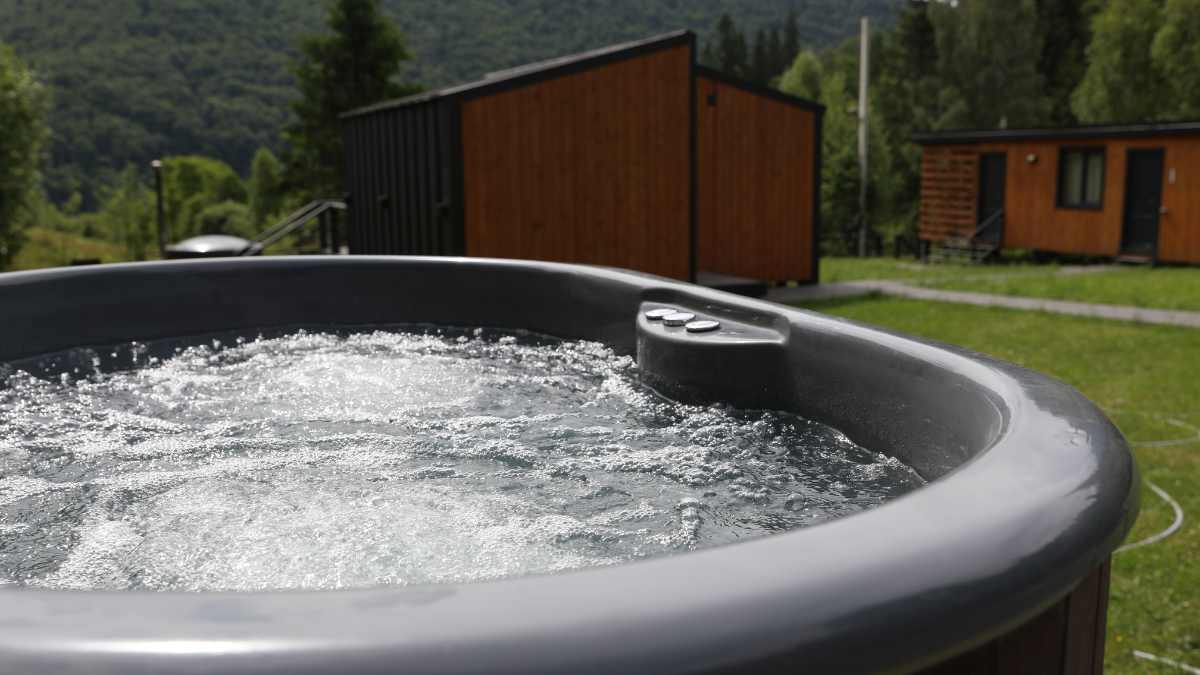
- Outdoor space people use. This property already had a hot tub and a fire pit, and a garage that could be converted into an eighth bedroom.
- Pets allowed. North Georgia is very pet friendly. Guests like to bring their pets, so allowing them helps.
- A game room, a better gym and a sauna. The existing gym looked like a basic hotel gym. A barrel sauna and a better gym were two upgrades we suggested.
- A theme that matches the town. In Helen, German-style decor ties the stay to the reason guests come in the first place.
- Lifestyle photos. A fire pit with blankets, wine glasses and s'mores sells the stay better than an empty patio.
One idea we could not support with data: a movie theater room. There are not many in this market, so we could not point to a return for one. More on this in our guide to amenities that actually increase revenue.
Revenue is not profit, and the top takes real operations
Revenue is the top line. The full model also takes out platform fees from Airbnb and VRBO, utilities, taxes, maintenance, cleaning, insurance and HOA fees. Run those numbers before you decide a property works.
Reaching the top 10 percent is not automatic either. It takes a strong operator or a revenue manager, and a well-optimized listing to go with them. A good revenue manager cannot make up for weak photos and a weak listing.
How to estimate revenue for a Blue Ridge property
- Pull comps within 10 miles of the property.
- Match the bedroom count and remove bad data.
- Look at the average, the top 25 percent and the top 10 percent.
- Choose a target below the top, and adjust for what your property lacks, such as a mountain view.
- List the amenity gaps and what closing them would cost.
- Subtract platform fees, utilities, taxes, maintenance, cleaning, insurance and HOA fees.
These figures come from one example property and one comp set. They are estimates, not a promise of what any property will earn.
Join the strIQ Squad
Want to see more deals like this one? Join the free strIQ Squad community on Skool. We evaluate a different market or property every Friday on Find It Friday, and you can ask questions and connect with other investors who are doing the same thing.

Related posts



Ready to invest with speed & confidence?
Join 1,000+ investors who stopped guessing.
